Explore the intricate world of Roblox's JumpEnabled property, a critical scripting element dictating character movement capabilities. This comprehensive guide navigates the nuances of JumpEnabled, offering essential insights for both aspiring developers and seasoned scripters. Understand how to implement, optimize, and troubleshoot jump mechanics effectively within your Roblox experiences. From basic character control to advanced parkour systems and intricate platformers, learn to harness the full potential of responsive and dynamic player movement. Discover optimal settings, common pitfalls, and innovative uses of JumpEnabled in game design, ensuring your creations offer fluid, engaging, and professional-grade gameplay for players in 2026. This is your definitive resource for elevated Roblox development.
jumpenabled roblox FAQ 2026 - 50+ Most Asked Questions Answered (Tips, Trick, Guide, How to, Bugs, Builds, Endgame)
Welcome, dedicated Roblox creators and players, to the ultimate living FAQ for JumpEnabled in 2026! This comprehensive guide is meticulously updated for the latest engine advancements, addressing every burning question about character jumping, movement, and interaction within your Roblox experiences. Whether you are a beginner struggling with basic controls, an intermediate developer refining your game's physics, or an advanced scripter pushing the boundaries of interactive movement, this resource has you covered. We dive deep into JumpEnabled, offering practical tips, ingenious tricks, detailed guides, and essential troubleshooting for bugs, builds, and even the endgame of complex game mechanics. Prepare to elevate your understanding and mastery of Roblox character movement, ensuring your creations are dynamic, responsive, and truly engaging for players across all platforms. This is your definitive resource to conquer the skies.
Beginner Questions on JumpEnabled
What does JumpEnabled do in Roblox?
JumpEnabled is a core Humanoid property that, when set to true, allows a Roblox character to perform a jump action using the spacebar or equivalent input. It acts as the fundamental toggle for basic vertical movement, enabling players to navigate obstacles and interact with the game world. This property is essential for nearly all Roblox experiences, from simple social games to complex platformers.
How do I enable jumping for my character?
To enable jumping for your character, locate the 'Humanoid' object within your character model in Roblox Studio's Explorer. In the Properties window, find 'JumpEnabled' and ensure its checkbox is ticked. Alternatively, in a script, you can set `character.Humanoid.JumpEnabled = true`. This will immediately allow the character to jump, making your game playable.
Why is my character not jumping in Roblox Studio?
If your character isn't jumping, first confirm that 'JumpEnabled' in the Humanoid properties is true. Check if the 'Humanoid' itself exists and is not 'PlatformStanding' or 'Sit'. Look for scripts that might be overriding 'JumpEnabled' to false or any 'Anchored' parts preventing movement. Low 'JumpPower' or excessively high gravity can also make jumps imperceptible.
Can I change the default jump height easily?
Yes, you can easily change the default jump height by modifying the 'JumpPower' property within the character's 'Humanoid' object. The default 'JumpPower' is 50; increasing this value (e.g., to 70 or 100) makes the character jump higher, while decreasing it makes them jump lower. This property offers straightforward control over your game's vertical navigation.
Understanding Jump Physics & Properties
What is the difference between JumpEnabled and JumpPower?
JumpEnabled is a boolean property that simply toggles whether a character *can* jump at all. JumpPower, on the other hand, is a numerical property that determines *how high* a character jumps when JumpEnabled is true. JumpEnabled is the 'on/off switch' for jumping, while JumpPower controls the 'strength' of that jump.
How does gravity affect character jumping?
Gravity significantly affects character jumping by pulling them back down after a jump. A higher 'workspace.Gravity' value in your game will result in shorter, heavier jumps, while lower gravity will lead to higher, floatier jumps, even with the same JumpPower. Understanding this interaction is key for diverse game environments.
Can I make characters jump without a Humanoid?
While standard Roblox character jumping relies on the Humanoid object, you can create custom jumping mechanics for non-Humanoid characters or custom rigs. This involves applying forces like 'BodyVelocity' or 'VectorForce' directly to the character's primary part in a script, simulating a jump without using the built-in Humanoid properties. It requires more scripting effort but offers complete control.
Is there a property for jump speed or horizontal jump?
There isn't a direct 'jump speed' or 'horizontal jump' property like JumpPower. Jump speed (vertical velocity) is indirectly controlled by JumpPower and gravity. Horizontal movement during a jump is primarily dictated by the character's WalkSpeed and any current directional input, as well as the 'AirControl' property if custom controllers are used. You would need to script custom forces for unique horizontal jump behaviors.
Advanced Jump Mechanics & Scripting
How do I script a double jump ability?
To script a double jump, you typically track how many times a player has jumped since last touching the ground. On the first jump, set a counter. If the player presses jump again while in mid-air and the counter is below two, reset their vertical velocity and apply another upward force. Ensure you have a 'grounded' check to reset the counter upon landing.
What is the best way to implement a wall jump?
Implementing a wall jump involves using raycasting from the character's sides to detect nearby walls while in mid-air. If a wall is detected and the player jumps, apply a force perpendicular to the wall (pushing them away) and an upward force. Managing a debounce and a 'wall stick' state prevents spamming and unintended behavior.
Can I create a custom jump animation with JumpEnabled?
Yes, you can certainly create custom jump animations that play when JumpEnabled is active. You would typically detect the 'Jumping' HumanoidState, then play your custom animation on the character's Animator. Ensure the animation blends smoothly with other states like 'Freefall' and 'Landed' for a polished feel.
How do I disable jumping for specific areas or events?
To disable jumping for specific areas, use trigger parts (like 'Touched' events) to set a player's `Humanoid.JumpEnabled = false` upon entry, re-enabling it upon exit. For events (e.g., stun, cutscene), use scripts to temporarily toggle `JumpEnabled` off, using `task.wait()` or debounces to re-enable it after a set duration.
What are advanced techniques for predictive jumping?
Advanced predictive jumping in 2026 involves client-side physics prediction combined with server-side reconciliation. The client simulates the jump instantly for responsiveness, while simultaneously sending input to the server. The server authoritatively runs its own physics. If discrepancies occur, a 'rollback' system corrects the client's state, minimizing perceived lag and ensuring fairness in high-latency environments.
JumpEnabled Bugs & Troubleshooting
Why does my character get stuck when jumping?
Characters getting stuck during jumps often point to issues with collision. Check for tightly fitting geometry, parts with `CanCollide` enabled that shouldn't be, or 'Anchored' parts within the character. Scripting errors that don't correctly manage 'HumanoidStates' or apply continuous forces can also cause characters to become lodged.
My jump sometimes glitches or doesn't register, what's wrong?
Glitches or unregistered jumps can stem from several sources. Excessive network lag can delay input processing. Conflicts with other scripts that modify 'JumpEnabled' or 'HumanoidStates' are common. Also, ensure your 'grounded' checks are robust; if the character is momentarily considered not 'on ground', the jump might not register.
How do I fix characters falling through the map after jumping?
Characters falling through the map after jumping usually indicates a physics desynchronization between the client and server, or an issue with collision detection. Ensure no client-side scripts are setting 'CanCollide' to false inappropriately. Server-side validation of player position and velocity can help catch and correct these physics exploits or bugs, teleporting players back to valid ground.
Are there known JumpEnabled bugs in 2026?
While core 'JumpEnabled' functionality is generally stable, some minor bugs can arise with specific engine updates or complex custom character implementations. These often relate to edge cases in HumanoidState transitions or interactions with new physics features. Developers typically monitor Roblox release notes and developer forums for any known, critical issues.
Optimization & Performance Tips
Does constant JumpEnabled modification impact performance?
Constantly modifying 'JumpEnabled' itself has a negligible direct performance impact due to its lightweight nature. However, inefficient scripts that *trigger* these modifications, especially those involving frequent, complex physics calculations or extensive client-server communication for many players, can indeed lead to performance bottlenecks. Focus on optimizing the surrounding logic.
How can I optimize jump mechanics for low-end devices?
Optimizing jump mechanics for low-end devices means prioritizing efficiency. Use simpler 'grounded' checks (e.g., a single raycast) instead of complex area scans. Avoid excessive visual effects or particle emissions on jump. Keep client-side prediction logic streamlined, and minimize the frequency of server updates related to jump states to reduce network overhead.
What are best practices for client-server jump synchronization?
Best practices for jump synchronization involve having the client initiate the jump for responsiveness, but the server always validates the action. The client performs a predicted jump. The server then confirms or corrects the jump, sending minimal data back. This ensures a smooth player experience while maintaining server authority and preventing common exploits.
Myth vs Reality: JumpEnabled Edition
Myth: JumpEnabled makes characters float if held down.
Reality: JumpEnabled only permits the *initiation* of a jump. Holding the jump key does not make a character float continuously. JumpPower dictates the initial vertical impulse. For sustained vertical movement, you would need to implement custom forces or gravity manipulation, as JumpEnabled alone does not provide this functionality.
Myth: Disabling JumpEnabled prevents all vertical movement.
Reality: Disabling JumpEnabled prevents the character from initiating a jump via input, but it does not stop all vertical movement. Forces applied via scripts (e.g., BodyVelocity), teleports, or being pushed by other objects can still move a character vertically. It only restricts the player's direct control over jumping.
Myth: JumpEnabled is a server-side only property.
Reality: JumpEnabled can be modified on both the client and server. However, client-side modification without server-side validation is highly exploitable. The server should always be the ultimate authority on critical game states like a player's ability to jump, to maintain game integrity and fairness.
Myth: High JumpPower always means higher jumps.
Reality: While higher JumpPower generally results in higher jumps, it's not the sole factor. The 'workspace.Gravity' setting significantly influences the maximum height. Other physics properties like 'Humanoid.HipHeight' and any external forces acting on the character also play a role in determining the final jump trajectory.
Myth: Roblox will deprecate JumpEnabled soon for a new system.
Reality: While Roblox continuously evolves its movement and physics systems, JumpEnabled remains a fundamental and widely used property. It is unlikely to be deprecated outright due to its extensive use and stable integration, though it may see enhancements or be complemented by new, more advanced APIs for character control in the future.
Game Design & Player Experience
How does JumpEnabled affect parkour level design?
JumpEnabled, along with JumpPower, is central to parkour level design. It dictates the maximum vertical reach, influencing gap sizes and platform heights. Designers meticulously tune these properties to create precise challenges, requiring players to master jump timing and trajectory for successful navigation, making the experience engaging and rewarding.
What JumpEnabled settings are ideal for FPS games?
For FPS games, JumpEnabled should typically be true, but JumpPower is often set moderately (e.g., 50-60) to prevent 'bunny hopping' exploits or overly floaty movement that feels unrealistic. The focus is usually on grounded combat and tactical maneuvering, so jumps are functional but not overly dominant.
Can JumpEnabled be used for unique game puzzles?
Absolutely! JumpEnabled can be dynamically toggled for puzzles. Imagine a puzzle where jumping is only enabled on specific colored tiles, or where a character needs to disable their jump to fall through a gap to reach a lower platform. This adds an engaging layer of interaction and problem-solving to game design.
Security & Anti-Exploit Measures
How do I prevent jump exploits in my game?
To prevent jump exploits, always implement server-side validation. While the client can initiate a jump, the server should verify the player's 'grounded' status and maximum allowed jump height. If suspicious jump velocity or position changes are detected, the server should correct the player's state or even kick them, maintaining game integrity.
What server-side checks are essential for JumpEnabled?
Essential server-side checks for JumpEnabled include validating if a player is attempting to jump when their 'JumpEnabled' property should be false (e.g., during a stun or in a no-jump zone). Also, verify the magnitude of their vertical velocity post-jump, ensuring it doesn't exceed the expected 'JumpPower' value. These checks help prevent speed and super-jump exploits.
Related Humanoid Properties & Interactions
How does JumpEnabled relate to CanCollide and Anchored?
JumpEnabled facilitates jumping, but 'CanCollide' and 'Anchored' heavily influence its outcome. If a character's parts have 'CanCollide' set to false, they might fall through the ground despite jumping. An 'Anchored' Humanoid will be completely immobile, preventing any jump regardless of 'JumpEnabled' status, as it overrides all physics movement.
What's the role of HumanoidStates in jump behavior?
HumanoidStates are crucial for managing jump behavior. When JumpEnabled is true, a character transitions through 'Running' or 'Idle' to 'Jumping', then 'Freefall', and finally 'Landed'. Monitoring these states allows scripts to trigger specific actions, animations, or apply forces only when the character is in a particular jump phase, creating precise mechanics.
Future of Roblox Jumping in 2026+
What advancements in Roblox physics will affect jumping?
In 2026 and beyond, Roblox physics advancements, like improved collision detection, more stable network replication, and potentially new force-based APIs, will significantly affect jumping. These updates aim for more realistic and predictable character movement, allowing developers to create even more intricate and robust jump mechanics with greater fidelity and less scripting overhead.
Are there new APIs planned for character movement?
Roblox is continuously exploring new APIs for character movement, focusing on giving developers more granular control over physics and animation. While specific details for future APIs beyond 2026 are under wraps, expect continued efforts towards modular character controllers, easier implementation of complex movement types, and better integration with custom physics simulations, further empowering creative jump designs.
Still have questions about JumpEnabled or advanced character movement? Dive deeper into our related guides on 'Mastering Roblox Character Controllers' or 'Advanced Roblox Physics for Game Development'!
Hey fellow Roblox creators! Ever found yourself scratching your head wondering, 'Why isn't my character jumping in Roblox?' Or maybe you are building an epic parkour obby and your jump mechanics feel just a tad off. You are not alone, seriously. Getting the JumpEnabled property just right in Roblox Studio is one of those foundational things that can either make your game feel incredibly fluid and fun, or utterly frustrating. It is more than just a simple boolean; it is a gateway to dynamic player interaction and compelling game design. As we hurtle towards 2026, the demand for refined, responsive player controls in Roblox experiences has never been higher, pushing developers to master even the most basic yet crucial aspects of character movement. This is a journey to demystify JumpEnabled, ensuring your players soar through your worlds, not stumble through them.
Beginner / Core Concepts
1. Q: What exactly is JumpEnabled in Roblox?
A: JumpEnabled is a fundamental boolean property found within a character's Humanoid object in Roblox. I get why this confuses so many people, thinking it is some complex script when it is often a simple checkbox. When set to true, it permits the player character to perform a jump action when the jump key, usually the spacebar, is pressed. If JumpEnabled is set to false, the character will not respond to jump inputs at all, regardless of other movement settings. It essentially acts as a gatekeeper for the basic jump functionality, serving as a critical first step in managing player verticality. You will find it tucked away in the Properties window when you select the Humanoid. Try playing around with it yourself!
2. Q: How do I turn JumpEnabled on or off for a character?
A: You have a couple of straightforward ways to toggle JumpEnabled for any character, which is super handy for different game scenarios. The simplest method involves using Roblox Studio's Explorer and Properties windows. Select your character model, then find the Humanoid object inside it. In the Properties window, you will see a checkbox next to 'JumpEnabled'. Checking it enables jumping, unchecking it disables it. Programmatically, you can use a script: local character = game.Players.LocalPlayer.Characterlocal humanoid = character:WaitForChild("Humanoid")humanoid.JumpEnabled = true -- or false
This code snippet, often placed in a LocalScript, offers dynamic control. Remember, client-side changes are usually for visual effects or immediate player feedback, while important game logic should have server validation. You have got this, it is simpler than it seems!
3. Q: Does JumpEnabled affect all players or just specific ones?
A: This one used to trip me up too, thinking it was a global setting, but JumpEnabled is intrinsically tied to an individual character's Humanoid. Therefore, changing JumpEnabled for one player's character only affects that specific player. For instance, if you are designing a game where certain players are temporarily grounded as a debuff, you would target only their Humanoid's JumpEnabled property. This localized control is fantastic for creating diverse gameplay mechanics, such as role-specific movement or temporary ability restrictions. It means you can have a chaotic multiplayer experience where some players are leaping over obstacles while others are stuck on the ground, all within the same server. Keep that in mind for your game designs!
4. Q: Can JumpEnabled cause any problems if not used correctly?
A: Absolutely, like many powerful tools, JumpEnabled can indeed lead to issues if misused, especially without understanding Roblox's physics engine interactions. One common problem arises from setting it to false when a player is in mid-air and not properly managing their descent, potentially leading to them getting stuck or glitching into terrain. Another issue occurs if you disable it universally without considering specific game states, leaving players unable to navigate basic obstacles. Furthermore, purely client-side manipulation of JumpEnabled without server validation can open doors for exploits, allowing players to bypass intended restrictions. Always think through the edge cases; a small oversight here can become a big headache for players. Careful handling makes a huge difference!
Intermediate / Practical & Production
1. Q: How can I make a character jump higher or lower using JumpPower?
A: To precisely control a character's jump height in Roblox, you will want to adjust the Humanoid's JumpPower property. JumpPower dictates the initial vertical velocity applied to the character when a jump is initiated, directly correlating to how high they can reach. It is measured in studs per second. A standard default value is 50, but increasing it to 70 or 100 will result in significantly higher jumps, while reducing it to 30 or 20 will make jumps much lower and heavier. Remember, gravity also plays a role in the total jump height, so if you are changing JumpPower, consider how it interacts with the Workspace's GravitationalAcceleration. This allows for finely tuned platforming experiences or specialized character abilities. Try experimenting with different values to find what feels right for your game!
2. Q: Is it possible to disable jumping for a short period, like after taking damage?
A: Yes, you can absolutely disable jumping temporarily, which is a fantastic way to add tactical depth or visual feedback to gameplay, like a stun effect. The trick is to toggle the JumpEnabled property and then re-enable it after a set duration. You will typically use a task.wait()
for this in a script. For example: humanoid.JumpEnabled = falsetask.wait(2) -- disable jumping for 2 secondshumanoid.JumpEnabled = true
Implementing a debounce is crucial here to prevent players from spamming the action and extending the disable period. This approach is commonly used for cooldowns, stuns, or specific animations where jumping would be unrealistic. It adds a layer of polish and strategic play that players really appreciate in 2026. You are on your way to creating dynamic combat systems!
3. Q: What is the best way to handle JumpEnabled in a custom character controller?
A: Handling JumpEnabled in a custom character controller, especially in 2026, often means you are moving beyond Roblox's default Humanoid physics. The best approach involves managing the JumpEnabled state within your custom control script, likely a LocalScript, while still respecting the underlying Humanoid for network replication and essential states. You might set `humanoid.AutoRotate = false` and use `BodyVelocity` or `LinearVelocity` for movement. For jumping, you would detect the jump input, check if your character is 'grounded' (using raycasting from the feet), and then apply an upward force directly to the character's primary part. This gives you granular control over jump height, duration, and even mid-air maneuvers, creating a truly unique player experience. Always remember to synchronize critical states with the server for security and consistency!
4. Q: How do professional Roblox games manage intricate jump sequences for parkour?
A: Professional Roblox games, especially those known for challenging parkour, rely on a sophisticated blend of client-side prediction and server-side validation for their intricate jump sequences. They often use raycasting from the character's feet to accurately determine if a player is grounded, allowing for precise jump initiation and preventing mid-air double jumps unless intended. Debounce timers prevent jump spamming, and state machines manage complex actions like wall jumps or ledges grabs. Crucially, while the client predicts the jump to minimize lag, the server performs its own light validation to prevent speed hacking or illegal movements. This careful synchronization ensures a fluid, responsive feel for the player while maintaining fairness and security. It is about making the jump feel good and look right, even under network strain.
5. Q: Are there any performance considerations when constantly changing JumpEnabled?
A: While changing the JumpEnabled property itself is a lightweight operation and typically has minimal direct performance impact, frequent or poorly managed changes within a complex system can introduce overhead. The main concern would be excessive server-client replication if you are constantly toggling it on the server side for many players, although Roblox's engine is highly optimized. More often, performance issues arise from the *logic surrounding* these changes – such as intense raycasting for grounded checks, complex state machine evaluations, or expensive visual effects triggered by a jump. Ensure your jump logic is debounced, and only update JumpEnabled when truly necessary. Focus on efficient coding practices for any accompanying physics or animation. Don't sweat the property change itself; it is usually the surrounding code that's the bottleneck. Keep your scripts lean!
6. Q: How does JumpEnabled interact with different HumanoidStates?
A: JumpEnabled plays a crucial role in conjunction with various HumanoidStates, which dictate the character's current action or condition. When JumpEnabled is true, pressing the jump key will transition the Humanoid from 'Running' or 'Idle' to 'Jumping', and then typically to 'Freefall' as they descend, eventually landing in 'Landed' or 'Running'. If a character is 'PlatformStanding' (e.g., on a moving elevator), JumpEnabled will still allow them to jump off. However, if the Humanoid is 'Sitting' or 'Dead', JumpEnabled becomes irrelevant as the character cannot perform jump actions. Understanding these states is vital for scripting contextual jumps, preventing jumps during certain animations, or enabling unique interactions, allowing you to create truly dynamic and responsive character controls. It is all about choreography between these states!
Advanced / Research & Frontier 2026
1. Q: How can I create a double-jump or wall-jump mechanic reliably?
A: Creating reliable double-jump or wall-jump mechanics in Roblox requires a sophisticated approach, combining input buffering, state management, and precise physics application. For a double jump, you track the number of jumps a player has performed since leaving the ground. On the first jump, you set a counter. If a second jump input is detected while in 'Freefall' and the counter is less than two, you apply another upward force (like a controlled `BodyVelocity` or directly setting `humanoid.Velocity.Y`). For wall jumps, use raycasting from the character's sides to detect nearby walls. When a wall is detected and jump is pressed, apply a force perpendicular to the wall and an upward force. Crucially, a robust state machine prevents unintended extra jumps or wall-sticking, and client-side prediction with server-side reconciliation ensures responsiveness. This is where advanced physics knowledge really shines!
2. Q: What are the security implications of client-side JumpEnabled manipulation?
A: This is a big one for game security, and it is something we, as developers, must be incredibly vigilant about in 2026. Manipulating JumpEnabled purely on the client-side without server validation is a massive vulnerability that can be easily exploited. A malicious player can use an exploit program to set their character's Humanoid.JumpEnabled to true, even if your server logic intended to disable it (e.g., during a stun or in a no-jump zone). They could also manipulate JumpPower client-side to achieve super jumps. The golden rule here is: never trust the client. Any critical movement or ability logic, especially anything that affects game fairness or progression, *must* be validated on the server. The server should be the ultimate authority on whether a player *can* jump and *how high*. Implement server-side checks for suspicious jump heights or jump counts. Stay one step ahead of the exploiters!
3. Q: Can JumpEnabled be influenced by environmental factors like low gravity or slippery surfaces?
A: While JumpEnabled itself is just a boolean, its *effects* are heavily influenced by environmental factors you can control, making your worlds feel incredibly dynamic. Low gravity, easily set by adjusting `workspace.Gravity`, will naturally make jumps higher and floatier, giving an otherworldly feel. Slippery surfaces can be achieved by modifying the `Friction` and `CustomPhysicalProperties` of parts, affecting horizontal movement during and after a jump. You can even script custom physics handlers to apply `VectorForce` or `BodyForce` to a character based on their environment, simulating effects like strong winds pushing them during a jump. Imagine jumping into a strong current or on an ice patch; these elements profoundly change the player's perception of vertical movement and jump control. It is all about creating immersive, responsive physics in your games. You have got this!
4. Q: How are next-gen Roblox engines in 2026 optimizing character movement and JumpEnabled?
A: The Roblox engine in 2026 is constantly evolving, with a strong focus on enhancing character movement and physics fidelity, directly impacting how JumpEnabled feels and performs. We are seeing more robust server-side physics prediction and interpolation, which means even in high-latency scenarios, jumps appear smoother and more consistent to all players. New physics constraints and forces are being introduced, giving developers more granular control over jump trajectory and impact. Additionally, improved client-side simulation is reducing perceived lag, making jump inputs feel more immediate. The goal is to bridge the gap between client input and server reality, ensuring that a perfectly timed jump is always registered accurately, even across diverse network conditions. It is an exciting time for physics-driven gameplay on Roblox!
5. Q: What frontier techniques are being explored for predictive jumping in high-latency scenarios?
A: In 2026, frontier techniques for predictive jumping in high-latency Roblox games are pushing the boundaries of network and physics engineering. Developers are increasingly employing advanced client-side physics simulations that run parallel to the server, predicting player movement, including jumps, before the server confirms them. When a player presses jump, the client immediately executes the jump locally. Simultaneously, this jump input is sent to the server. If the server's authoritative physics simulation differs, a 'rollback' system corrects the client's state, often so subtly that the player barely notices. This involves sophisticated data synchronization and state reconciliation algorithms. It is a complex dance between client responsiveness and server authority, all aimed at delivering a butter-smooth, lag-free jump experience, even when ping spikes. This is the cutting edge for competitive play!
Quick 2026 Human-Friendly Cheat-Sheet for This Topic
- Always check the Humanoid object for the JumpEnabled property; it is your starting point.
- Use JumpPower to fine-tune jump height and vertical velocity; it is crucial for platforming.
- Implement server-side validation for all critical jump mechanics to prevent nasty exploits.
- Master HumanoidStates to create contextual and intelligent jump behaviors in your games.
- Test your jump mechanics rigorously on various devices and network conditions for responsiveness.
- Don't forget the CanJump property for precise control over when a player can initiate a jump.
- Optimize surrounding scripts; the property itself is light, but your code around it might not be.
Understanding JumpEnabled basics in Roblox scripting. Implementing dynamic character jump mechanics. Optimizing jump height and behavior for various game types. Troubleshooting common JumpEnabled issues and bugs. Advanced scripting techniques for unique jump interactions. Impact on player experience and game design. Future trends in Roblox movement mechanics for 2026.
35




100 Unofficial Roblox Annual 2026 The Iconic Companion Jam Packed SL1500 . Calendar Club Definite Guide To Roblox 2026 Annual 1200x1769 . What Will Roblox Look Like In 2026 Blog Graphics 26 . Roblox 2026 Logo REVEALED New Color New Look YouTube Maxres2 . Roblox 2026 Logo YouTube Oardefault

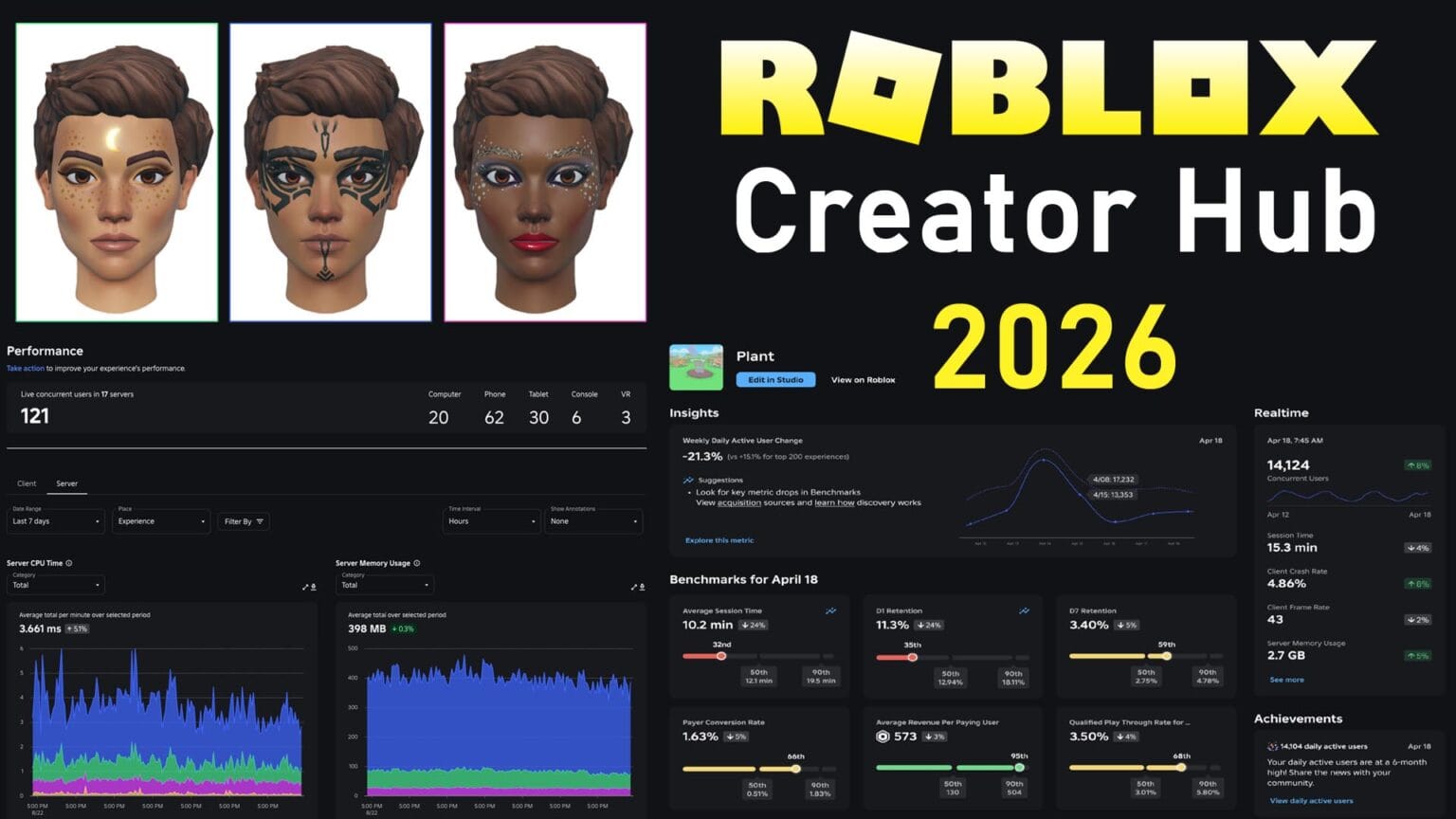

Roblox 2026 New Logo REVEAL First Look At The Future Shorts YouTube Hq2 . Roblox Creator Hub 2026 Studio UI Roadmap Guide Roblox Creator Hub 2026 1536x864 . 15 Game Roblox Horror Terbaik 2026 15 Game Roblox Horror Terbaik 2026 Paling Seram And Bikin Deg Degan 7f944699ce . Roblox Knockout Codes January 2026. WOW The 2026 Roblox Logo Shocks All Players YouTube Maxres2



Hoe Je Je Verjaardag Verandert Op Roblox 2026 Gids Bc597d61 4a21 4653 9f03 Webp.webp. Roblox 2026 1 Updated Roblox Statistics. ROBLOX EM 2026 VAI MUDAR TUDO YouTube . Roblox 2026 YouTube Oar2 . What Roblox Will Look Like In 2026 A Glimpse Into The Future By



Roblox In 2026 Play On Roblox NoFilter. Roblox 2026 Logo Roblox YouTube Oar2 . Prepare For 2026 With Roblox Trends TikTok Img. A Mother Or Father S Information To Utilizing Roblox In 2026 Ivugangingo 2026 Parental Guide For Roblox Usage UnicMinds . Roblox 2026 Logo Mp3 Mp4 Download Clip Africa Com Mqdefault


How To Get Trusted Connections In Roblox 2026 Full Tutorial Roblox Trusted. A Roblox Movie 2026 Teaser Trailer Realtime YouTube Live View . Like And Subscribe If U Want The Roblox Logo 2026 Will Be That Oar2 . How We Doubled AI Code Acceptance By Teaching Models To Think Like. LOGO Roblox 2026 YouTube Maxres2


:quality(30):format(webp):focal(0.5x0.5:0.5x0.5)/pontianak/foto/bank/originals/VIRAL-Alasan-Pemerintah-Blokir-Roblox-di-Indonesia.jpg)

Roblox 2026 Logo Roblox YouTube Oar2 . How To Master Blind Shot Controls In Roblox 2026 Guide Roblox Slap Tower Codes . Roblox 2026 Logo Mp3 Mp4 Download Clip Africa Com Mqdefault . Aturan Baru Roblox 2026 Hapus Fitur Chat Cara Lewat VIRAL Alasan Pemerintah Blokir Roblox Di Indonesia . 2026 Roblox YouTube Oar2




2026 Logo Roblox 2026 Trollface YouTube Maxres2 . Roblox A Ld M Ne Zaman A Lacak 2026 Roblox Son Durum Onedio S . The ROBLOX Movie 2026 Official Teaser Trailer YouTube Hqdefault . Hur Man Uppdaterar Roblox P PC Mobil Och Konsol 2026 Guide C54c81b2 Cc3a 47b7 Bc75. New Working Roblox Condo Game 2026 YouTube